Unplanned downtime
An unexpected line stoppage is one of the costliest things that can happen on a factory floor. Fixed maintenance schedules miss the early signs that a failure is coming.
15+ years working on industrial AI. We help manufacturers catch problems before they stop the line, keep quality consistent, and bring AI onto the shop floor without disrupting the people running it.
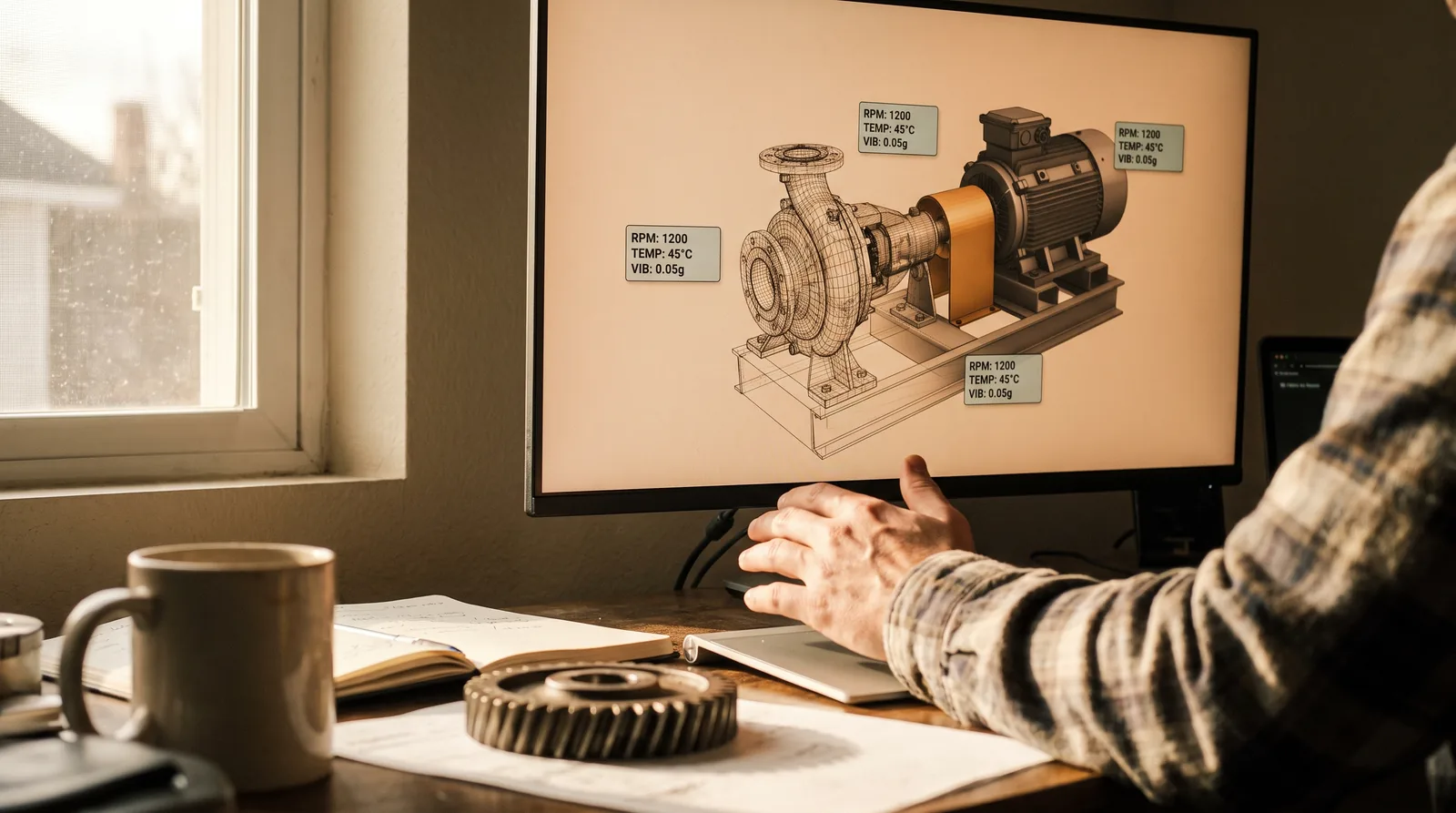
An unexpected line stoppage is one of the costliest things that can happen on a factory floor. Fixed maintenance schedules miss the early signs that a failure is coming.
Manual inspection is slow and inconsistent by nature. A defect caught after shipment costs far more to fix than one caught on the line.
Overstocking ties up cash. Understocking delays production. Most demand forecasts are still built on spreadsheets and gut feel.
Energy is a meaningful share of manufacturing cost, and without granular monitoring, most of what's being wasted stays invisible.
Sensor data and machine learning models that pick up on wear patterns before they turn into a breakdown. Maintenance happens when it's needed, not on a fixed calendar.
Computer vision on the line that inspects output at production speed, so surface scratches, dimensional variance, and assembly errors get caught before they leave the line.
A live virtual model of your production environment, so you can run simulations and test scenarios before changing anything on the physical line.
Models trained on your sales history, market signals, and seasonal patterns, producing forecasts your procurement team can actually rely on.
Energy monitoring across your assets, with AI recommendations for shifting load and cutting waste without slowing down output.
Automation and agentic AI for production scheduling, procurement workflows, and handling exceptions in the supply chain.
We spend time on your floor to understand your processes, your data quality, and your constraints before proposing any technology.
Every manufacturing engagement starts with a contained pilot, proving value on one asset or line before any broader rollout.
We check results against your own targets. Once a pilot proves out, it expands step by step, with your operations team in control throughout.
Models get retrained as your equipment changes. We stay involved after go-live until your team is comfortable owning the system.
No - every engagement starts with a plant walk and data audit, then a contained pilot on one line or asset, proving value before any broader rollout. Your operations team stays in control throughout.
Sensor data feeds machine learning models trained to recognise wear patterns that precede a breakdown, so maintenance happens when a machine actually needs it instead of on a fixed calendar that misses early warning signs.
Yes - computer vision inspects output at line speed, catching surface scratches, dimensional variance and assembly errors before they leave the line, instead of relying on manual inspection that's inherently slower and less consistent.
That's normal, and it's exactly what the plant walk and data audit is for - we assess data quality and constraints before proposing any technology, and often the first project is closing data gaps rather than deploying a model.
Both, alongside predictive maintenance, quality inspection, demand forecasting and energy optimisation - a manufacturing engagement usually starts with whichever problem is causing the most downtime or rework, not a fixed package.
We stay involved after go-live until your team is comfortable owning the system, and models get retrained as your equipment and processes change - this isn't a one-time deployment that's left to drift.
Start the conversation
Tell us what's causing the most downtime or rework. We'll help you shape a clear first pilot and a realistic timeline before you commit to anything larger.