Unplanned failure in remote assets
An equipment trip at a remote site can take a long time to diagnose and repair. Every day it stays down is production you don't get back.
Remote assets, aging infrastructure, and no room for HSE failure. We bring predictive maintenance, SCADA-integrated digital twins, and better incident analysis to upstream, midstream, and downstream operations.
An equipment trip at a remote site can take a long time to diagnose and repair. Every day it stays down is production you don't get back.
Incident reports, permits to work, and audit trails eat up engineering hours. The patterns that would predict the next incident stay buried in the paperwork.
Years of SCADA and historian data locked in vendor formats, site by site. The data exists. The visibility across sites doesn't.
Older pipeline networks watched by fixed threshold alarms. Slow leaks and corrosion trends can slip under those thresholds for a long time.
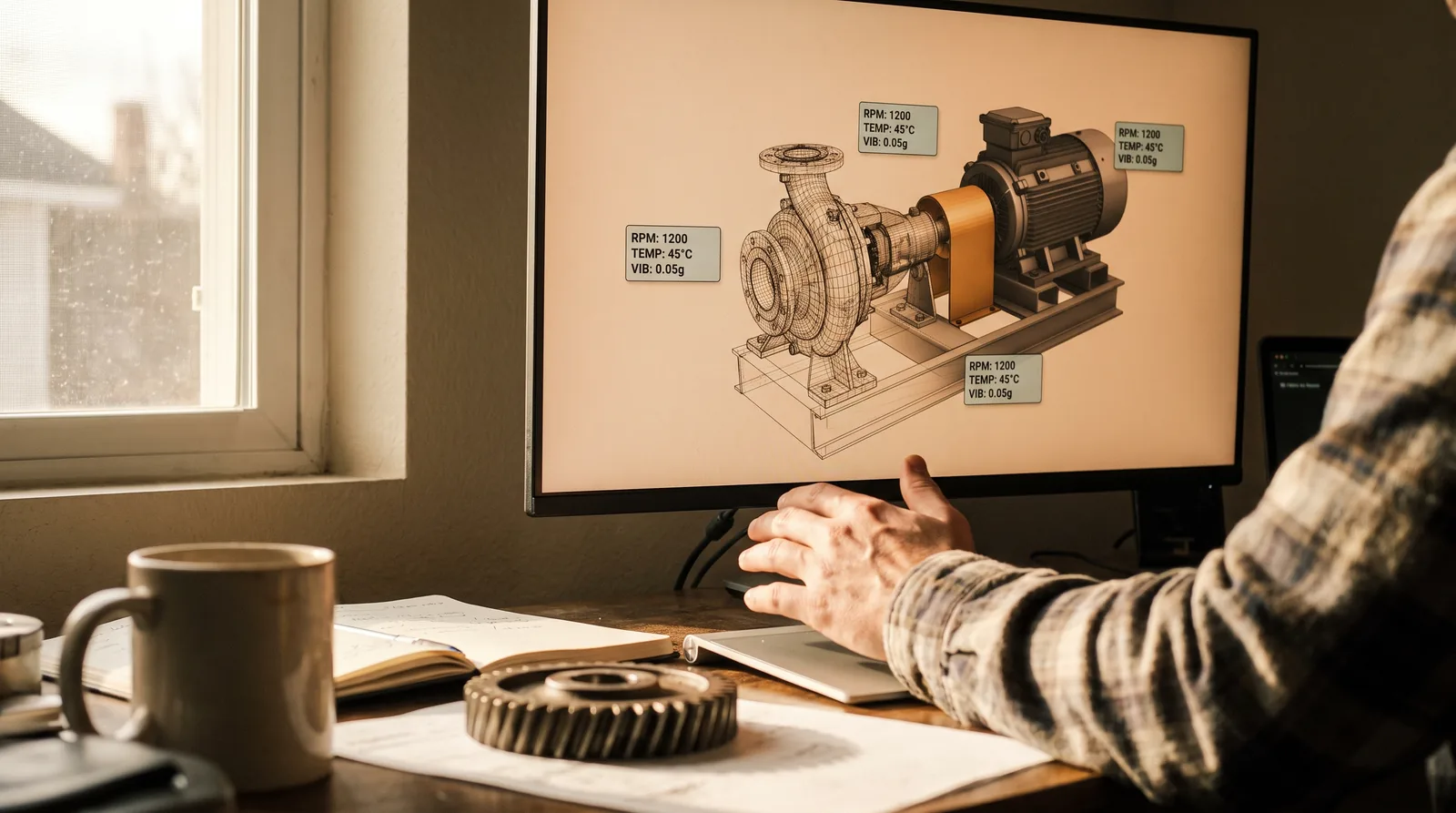
Live twins fed directly from SCADA and historians. Wells, rotating equipment, and pipeline segments modelled in one operational view.
Vibration, temperature, and process data combined to catch bearing wear and seal degradation before failure. Maintenance shifts from calendar to condition.
Language models that read incident reports and permits, and surface recurring causes and near-miss patterns that are easy to miss reading one at a time.
One screen for distributed assets: health scores, alarms ranked by consequence, and a design built to work on low-bandwidth site connections.
We work with your ops and instrumentation teams to map SCADA points, historian coverage, and data gaps before any modelling starts.
We start with one equipment fleet or one pipeline segment, and validate models against failure events your engineers already know about.
Your maintenance planners review the predictions. Rollout moves asset class by asset class as trust builds.
Models get retrained as operating conditions shift. Runbooks and dashboards are handed over to your operations team.
Yes - digital twins are fed directly from SCADA and historians, modelling wells, rotating equipment and pipeline segments in one operational view, without replacing the underlying systems.
Vibration, temperature and process data are combined to catch bearing wear and seal degradation before failure, shifting maintenance from a fixed calendar to actual equipment condition.
Yes - remote asset monitoring dashboards are built to work on low-bandwidth site connections, with health scores and alarms ranked by consequence on one screen for distributed assets.
Language models read incident reports and permits to surface recurring causes and near-miss patterns that are easy to miss reading reports one at a time, cutting the engineering hours that go into compiling audit trails by hand.
We validate against failure events your engineers already know about, starting with one equipment fleet or pipeline segment, and your maintenance planners review the predictions before rollout expands asset class by asset class.
The site and data survey maps SCADA points, historian coverage and data gaps before any modelling starts - making that historical data usable across sites is often the real first win, not just a preliminary step.
Start the conversation
Bring us your recent failure records. We'll walk through which of them a model would likely have caught, and what a first pilot would look like.